Every other day, I hear the same sweeping declarations in film and media circles:
“Gen Z only watches this.”
“Gen Z doesn’t vibe with that.”
“Gen Z wants a different kind of cinema.”
And I keep asking myself — which Gen Z are we talking about?
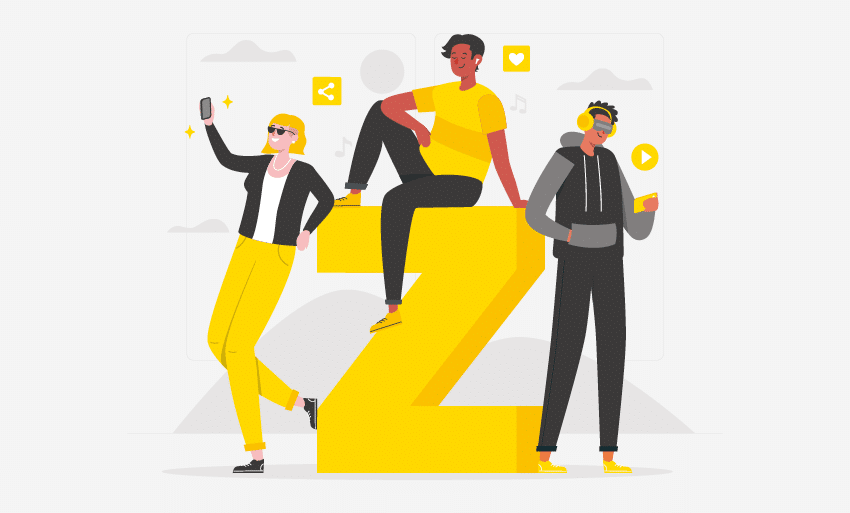
Is “Gen Z” now shorthand for a few thousand urban teenagers in posh pockets of Bombay, Delhi, Bangalore, or Hyderabad — oversized hoodies on, boba in hand, ramen in bowl, Western playlists on loop? Great for them, but does this micro-minority really represent an entire generation of India?
Because the real Gen Z — the 99% — looks very different.
He’s the boy in an Odisha village fighting to crack UPSC to pull his family out of a cycle they never chose.
She’s the 19-year-old girl lifting bricks at a construction site so her siblings don’t go to bed hungry.
He’s the young musician in Ranchi practising his taans when the world is asleep.
Do they not qualify as Gen Z simply because they don’t fit the Instagram aesthetic?
And if the youth supposedly “doesn’t care” about Hindi films or Indian music, then who is giving vintage songs and old movies millions — sometimes, billions — of YouTube views? Algorithms don’t click replay; people do.
So maybe the problem isn’t Gen Z.
Maybe the problem is the tiny lens through which we keep trying to define them.
Because if you look beyond the metros, beyond the boba, and beyond the buzzwords — the real Gen Z of India is far bigger, far hungrier, and far more culturally rooted than the industry likes to admit.
- Kaibalya Mohanty
(The author is an Oriya film actor and film teacher.
X (formerly Twitter): https://x.com/kaibalyamohant2
Instagram: https://www.instagram.com/kaibalya_mohanty