



























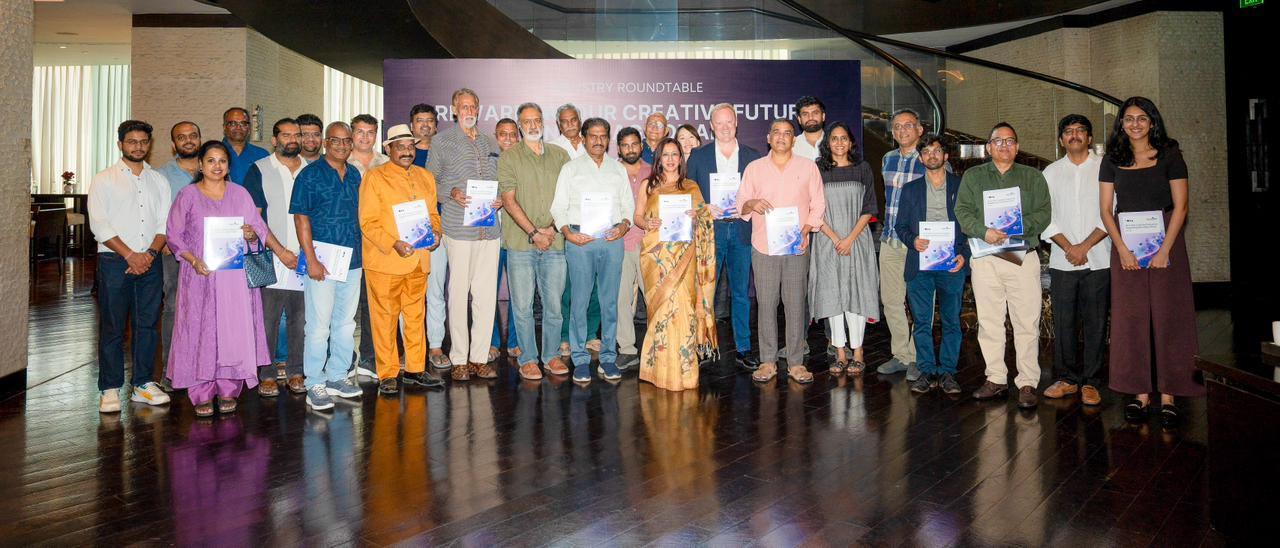
Creative industry leaders from across India came together last week at three industry roundtable conferences in Bombay, Delhi and Hyderabad to defend copyright in the age of artificial intelligence, calling on policy makers to strengthen, not weaken copyright which underpins creativity, investment and jobs.
The roundtables brought together organisations representing the film, music, book and news publishing and broadcasting industries, that collectively form a significant pillar of India’s creative economy.
Organizations representing the creative industries called on the government to reject any changes to copyright law that would weaken protections for creators and rightsholders. Instead, they urged policy makers to anchor AI policy in three core principles:
- Consent: that rightsholders must provide permission for any AI training of their works.
- Voluntary licensing: that the only compromise that provides certainty for all parties is voluntary licensing.
- Enforcement: that more needs to be done to ensure that rightsholders can enforce their rights in the digital environment, including greater and more simple civil damages and more effective criminal enforcement at all levels of government
A white paper entitled AI In The Creative Industry: Deepening The Value Chain by Koan Advisory in association with Creative First was released during the roundtables. It highlights how the screen industries in India have already adopted AI tools to enhance the filmmaking process while maintaining creativity at the heart of the practice.
The roundtable in New Delhi on Generative AI, Copyright and Intellectual Property, was chaired by Sanjeev Sanyal, principal Economic Advisor to the Prime Minister, where industry participants flagged serious concerns with DPIIT’s proposal to grant blanket access to copyrighted works for AI training at government set rates. The delegation urged that the proposal be withdrawn and the existing Copyright Act framework, based on voluntary licensing, be maintained, and welcomed Sanyal’s constructive engagement on these issues.
Speakers across the three cities emphasised that AI innovation and copyright protection are not in conflict and that respect for copyright is essential to ensuring that artificial intelligence evolves responsibly and supports long-term economic growth.
James Cheatley, vice president, VOD, Digital Affairs & Intellectual Property, Asia Pacific at the Motion Picture Association (MPA), said, “What we witnessed at this week’s stakeholder roundtables in India was both, encouraging and important. India’s creative industries demonstrated real leadership and foresight in recognising that strong copyright is not a barrier to innovation, but its foundation — especially in the age of AI. There was a clear and united understanding that weakening copyright would undermine the very ecosystems that allow creativity and technology to thrive. This alignment of creators, producers and industry voices in India sends a strong signal, reinforcing a growing global resistance to efforts to weaken copyright protections at the moment they are most needed.”
Abhay Sinha, president, Film Federation of India (FFI), and Indian Motion Pictures Producers Association (IMPPA), vice president, International Federation of Film Producers Association (FIAPF), said, “Digital India must not become ‘free for all India’ — our creative works cannot be treated as raw material for someone else’s business model.”
Sanjay Tandon, founder and managing director, Indian Singers and Musicians Rights Association (ISAMRA), said, “AI companies using creative works without permission is theft, it kills the artist, hollows out investment, reduces risk taking, and ultimately shrinks the diversity of music and stories that Indians get to hear and see.”
Blaise Fernandes, president, Indian Music Industry (IMI), said, “Globally, deals are being done between copyright holders and AI companies. Why can’t the same be applicable to India?”
Nitin Tej Ahuja, CEO, Producers Guild of India, said, “From Hindi to regional language cinema, from music to publishing, India’s creative economy runs on one simple principle: if you use someone’s work or intellectual property, you must respect their rights.”
Avinash Pandey, secretary general, Indian Broadcasting and Digital Foundation (IBDF), said, “India’s ambition to be a global content hub depends on trust: creators must trust, the market will pay fairly, and investors must trust, rights can be enforced.”
Suresh Dagubatti, president, Telugu Film Chamber of Commerce, said, “AI should empower creators, filmmakers and the creative fraternity to be better rewarded for their efforts and not deprive them of their rights to monetise their works as they deem fit. Imposing a mandatory licensing model on copyright holders will be against the spirit of the Indian Copyright Act.”
Supriya Yarlagadda, CEO, Annapoorna Studios, and founding member, Active Telugu Film Producers Guild, said, “The Indian film industry is protected by strong copyright laws. We need policies enforced, so platforms and intermediaries do not profit from piracy, copyright infringement, or unlicensed use. New technology needs guard rails and accountability to ensure, the creative assets of our country continue to grow.”
Dil Raju, chairman, Telangana Film Development Corporation, and founder, Sri Venkateswara Creations, said, “Copyright protects livelihoods across India’s creative supply chain — writers, performers, technicians, editors, designers, small studios and thousands of MSMEs, that depend on fair returns through voluntarily negotiated licences. This model must always be respected, preserved and strengthened.”
Rishi Raj, chairman, CINEFIL Producers Performance Limited, said, “In the age of generative AI, strong copyright supports fair competition, aligning with India’s progressive policy approach. Protecting producers’ content and keeping creators at the centre of innovation is therefore paramount.”
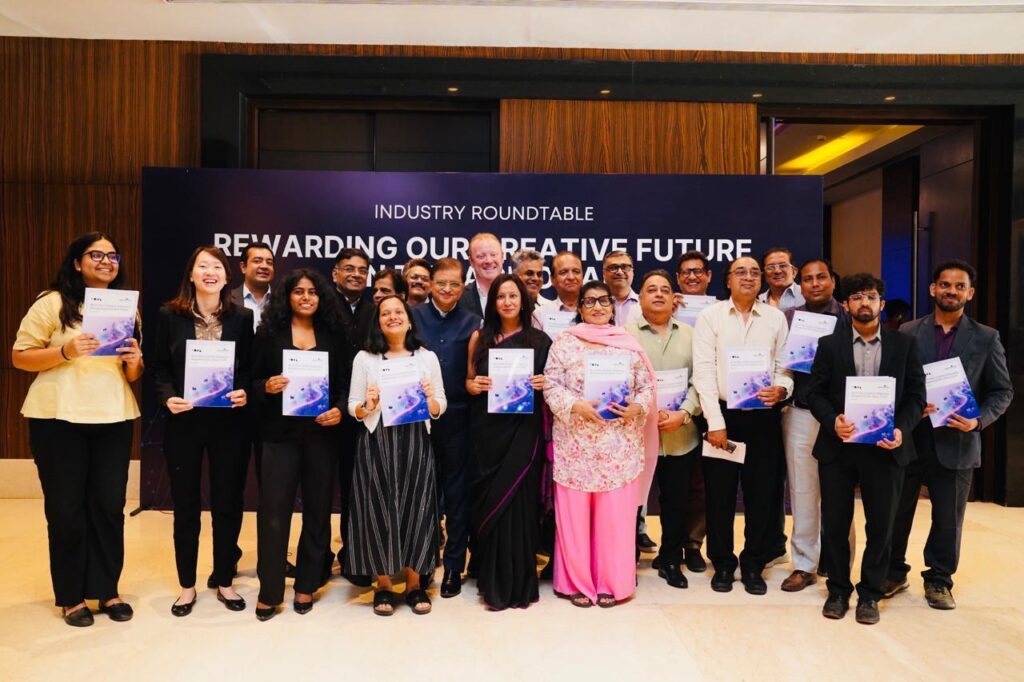
The roundtables form part of ongoing engagement, including the MPA lead-in event held at the India AI Impact Summit in New Delhi in February 2026, between the creative industries and policy makers on how India can lead globally on artificial intelligence while continuing to champion creativity, cultural expression and the rule of law.