





























That the opening of a film is very important is well-known in the trade. It doesn’t need to be underlined today that half the battle is often won when a film opens to bumper houses. That is why trade people track advance bookings so keenly and observe the opening day’s and opening weekend’s collections so closely.
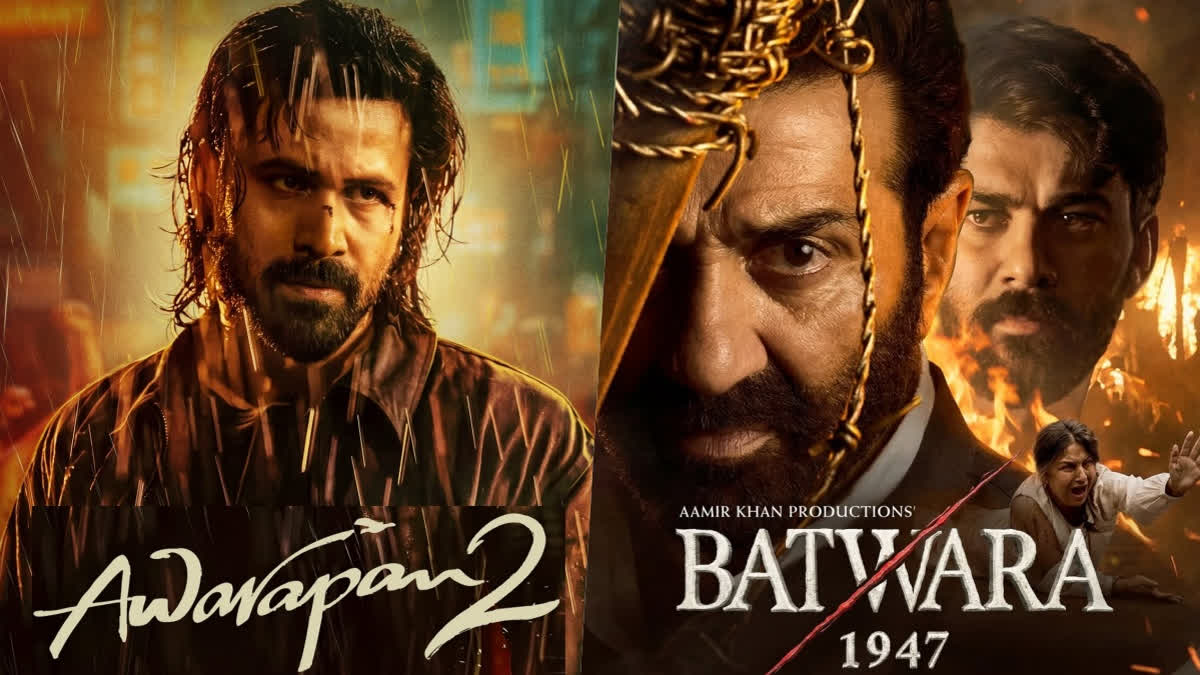
A month before the two releases of this week — Batwara 1947 and Awarapan 2 — nobody would’ve imagined that the two films would perform the way they have, at the box-office today (Friday, August 14) which is the opening day. While the initial of Awarapan 2 has taken the trade by surprise, that of Batwara 1947 has sent shock waves in the industry. The first day’s figures will emerge only tomorrow, but from rough estimates, it appears that the first day of Awarapan 2 could close at Rs. 20-plus crore! On the other hand, the first day’s net collections of Batwara 1947 could be just Rs. 5-6 crore.
What led to the great opening of the Awarapan sequel? Why should a flop film’s sequel take such a flying start? (For the uninitiated, Awarapan, which was released in June 2007, was a flop.)
Not many realised that although Awarapan was a box-office dud when it premiered 19 years ago, it became a much-loved film on the television circuit. Producer Mukesh Bhatt would know this because his re-issue television rights may have fetched almost the same price as the TV rights when they were sold for the first time. The music of Awarapan was super-hit. Perhaps, the extraordinary songs and the story of the film found far more takers on TV in the years after 2007 than in the cinemas in year 2007. The good point about Awarapan 2 is that it boasts of hit music too, and, what’s more, its music had become very popular in the days leading up to the release. It is the youth which drives film business today most of the times. The angst-ridden Shivam Pandit (character played by Emraan Hashmi in parts 1 and 2 of the film) resonated with the youngsters in India so well that the film was destined to fly on the opening day. And fly it did!
On the other hand, Batwara 1947 did not have much going for it except that it brought together the hat-trick team of director Rajkumar Santoshi and hero Sunny Deol after Ghayal, Damini and Ghatak. Additionally, Batwara 1947 was produced by Aamir Khan, no less! But as against these plus points, there were some minus points which led to the momentum for the film simply not building up in spite of good promotion. For one, the public realised from the trailer that the film dealt with the story of an old lady (played by Shabana Azmi) and a middle-aged man (Sunny Deol). It was crystal clear that the youth factor was missing — both, in terms of casting as also with regard to the script. Gadar 2 and Border 2 may have clicked at the box-office in recent times, but one fact cannot be denied: that the paying public is tired of India-Pakistan stories on the big screen. Another factor that went against Batwara 1947 was the absence of hit or even decently popular songs in it. That the film’s screenplay is full of defects is being realised by the public only after they are seeing the film, but the first-day audience wasn’t aware of the film’s content. Yet, many stayed away from the film, leading to its dull opening. If a film does not have the youthful feel, there are good chances that it will not open well. For, it is the youth which ensure a good opening to any film, not the older generation. The 30-plus audience prefer to wait for the first-day audience’s reports to come out before deciding whether they should watch a film or not. With a subject and cast like in Batwara 1947, it was almost an impossibility to get the youngsters interested in it — at least for the first day! Of course, if the film had merits, collections would’ve shown a perceptible jump during the latter shows of the day. But that also did not happen.
The opening day’s collections of both of today’s releases underline some pertinent points:
(i) that hit and super-hit music is important;
(ii) that the youthful factor is one of the most important aspects for a film to start off well on Friday;
(iii) that India-Pakistan stories may not be so exciting, after all;
(iv) that a super-hit stage-play (Batwara 1947 is based on Asghar Wajahat’s stage-play Jis Lahore Nai Vekhiya O Jamiya E Nai). For, if a super-hit play as the base was to guarantee a super-hit film, we’d be saying today, “Jis Batwara 1947 nai vekhiya O jamiya e nai!” (“Those who haven’t seen Batwara 1947, may not even have been born!”)