




























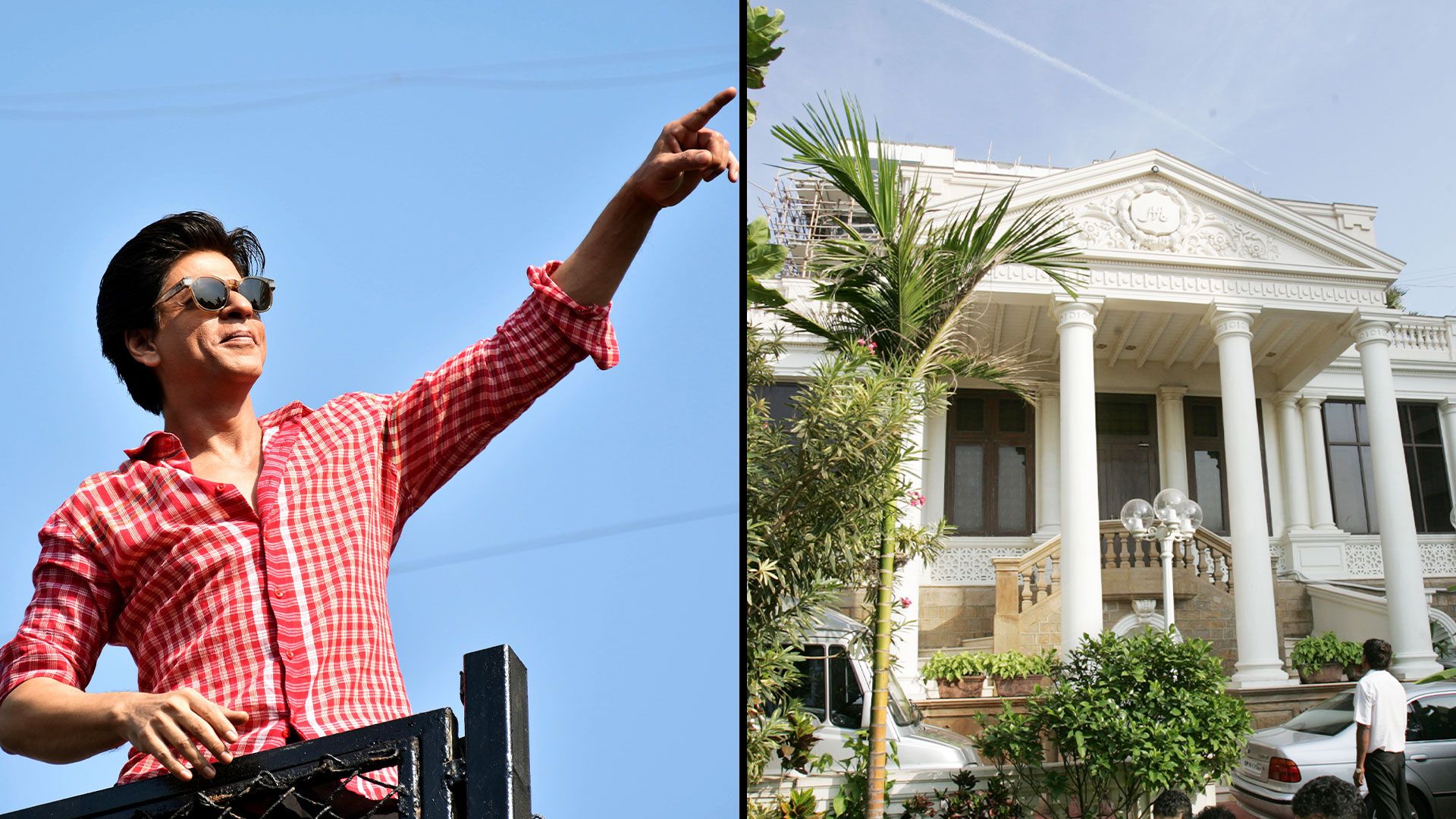
The Supreme Court today (July 14) dismissed an appeal challenging the Coastal Regulation Zone (CRZ) clearance granted for the addition of two floors to actor Shah Rukh Khan’s Mannat bungalow in Bombay, refusing to interfere with an order of the National Green Tribunal (NGT) which had rejected the challenge. A bench comprising Chief Justice of India Surya Kant, Justice Joymalya Bagchi and Justice V. Mohana dismissed the appeal filed against the order of the NGT’s Western Zone bench, Pune, which had rejected the petition by Bombay-based activist Santosh Daundkar alleging violations in the approvals granted for the proposed construction.
Advocate Shoeb Alam, appearing for the appellant, argued that the matter should not be viewed differently merely because it concerned a prominent film star. He added that the petitioner had earlier exposed the Adarsh housing scam and was a respected activist.
The bench responded that it was not at all influenced by the fact that the respondent was a star. The Chief Justice observed that the authorities had found that there was substantial compliance with the applicable law. He said, “They are living there. If in a residential house, they want to have (additional floors) …it’s their choice. Law is broadly followed. Why neighbour or anybody else (should intervene)?” The CJI further noted, “I have very serious doubts on the bona fide of the petitioner.” Shoeb Alam pleaded that at least the matter be remanded to the NGT for a consideration of the merits. He argued that the matter raised substantial issues and it did not deserve a threshold dismissal. However, the apex court was not convinced and it proceeded to dismiss the appeal.
The NGT had dismissed at the admission stage a challenge to the CRZ clearance granted for the addition of two residential floors to actor Shah Rukh Khan’s residence, Mannat, holding that no procedural irregularity or legal infirmity had been shown in the approval granted by the Maharashtra Coastal Zone Management Authority (MCZMA).
The petition had been filed seeking to quash the CRZ clearance dated January 3, 2025, issued by the MCZMA. Activist Daundkar alleged that the project was tainted by earlier CRZ violations, that heritage structures had been demolished without mandatory environmental clearance, that the property had originally been reserved for an art gallery, and that the project wrongly claimed to fall in CRZ-II instead of the more restrictive CRZ-1A category. He also raised objections regarding the property’s alleged coastal erosion, extraction of ground water and minerals, and previous construction activities.
However, the Tribunal found that none of these contentions demonstarted any illegality in the grant of the fresh CRZ clearance.
The apex court bench noted that the impugned clearance was confined to the addition of the seventh and eighth residential floors above the existing six-storey structure, with one duplex residential unit connected by an internal staircase. It recorded that the existing building had already been constructed before the grant of the impugned permission and that the proposal did not involve any horizontal expansion into areas attracting fresh CRZ restrictions.
The Tribunal had noted that according to the Development Plan 2034, the property is situated on a residential zone and is not reserved for any public purpose. It further recorded that the Municipal Corporation of Greater Mumbai had approved the building plans on November 7, 2024 and that the project site had been certified by the Indian Remote Sensing Centre, Madras, as falling within CRZ-II under the approved Coastal Zone Management Plan, 2019. The site was also found to be located on the landward side of the existing road.
The court’s bench observed that residential buildings are permissible in CRZ-II areas on the landward side of existing roads, subject to applicable town planning regulations and floor space index norms. It held that the proposed construction satisfied these requirements.
Rejecting the appellant’s submission that the property ought to be treated as falling within CRZ-1A because of its alleged heritage status, the bench held that it did not agree with the contention.
Finding no “lacuna” in the grant of the January 3, 2025 CRZ clearance, the Tribunal dismissed the appeal at the admission stage itself, observing that it had “no force”.